Mastering the Chocolate 3D Editable Text Style for High-Impact Visual Design
In the rapidly evolving landscape of digital graphic design, the ability to create text that commands attention while remaining fully customizable is a critical skill. Among the various aesthetic trends that have captured the imagination of designers and marketers alike, the Chocolate 3d Editable Text Style stands out as a sophisticated choice for branding, advertising, and creative projects. This specific visual approach combines the rich, warm appeal of chocolate tones with the dimensional depth of three-dimensional typography, resulting in a look that is both inviting and professional.
Understanding how to utilize this style effectively requires more than just knowing where to download a file; it involves grasping the technical specifications, the creative flexibility offered by vector formats, and the practical applications across different industries. Whether you are a seasoned graphic designer working in Adobe Illustrator or a business owner looking to enhance your brand identity, exploring the nuances of editable 3D text can significantly elevate your visual communication strategy.
The Anatomy of Chocolate 3D Typography
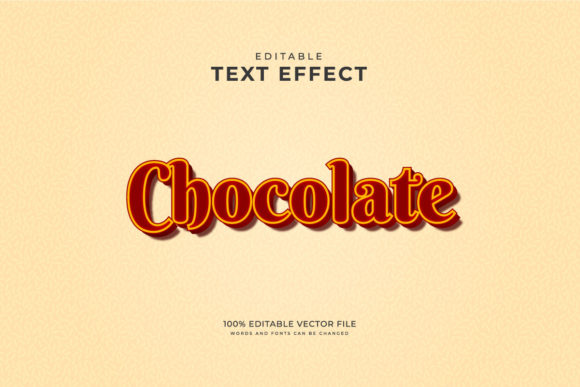
To appreciate the value of the Chocolate 3d editable text style, one must first understand its structural components. Unlike standard flat text layers found in basic word processors, 3D typography relies on extrusion, bevels, and shading to create the illusion of depth. The "chocolate" aspect refers not only to the color palette but also to the texture and finish often associated with high-quality confectionery packaging—smooth, glossy, and rich.
This style is typically constructed using vector-based software, allowing for infinite scalability without loss of quality. The core characteristics include:
- Vector-Based Construction: Because the design is built on mathematical paths rather than pixels, it remains crisp at any size, from a small social media icon to a massive billboard.
- Editable Color Properties: As noted in product descriptions, all object colors are editable. This means the deep browns, creamy highlights, and shadow gradients can be adjusted to match specific brand guidelines instantly.
- RGB Color Mode: Optimized for digital screens, these files are prepared in RGB mode, ensuring vibrant display on websites, mobile apps, and digital advertisements.
- High-Resolution Readiness: The files are delivered in high resolution, making them suitable for print-on-demand services, merchandise, and high-definition video overlays.
The combination of these features ensures that the final output is not just a static image but a dynamic asset that can be manipulated to fit diverse creative needs.
Why Vector Formats Are Essential for Modern Design Workflows
A common misconception among beginners is that 3D effects require heavy raster editing tools like Photoshop. While Photoshop can simulate 3D text, it lacks the precision and editability of vector-based workflows. The availability of samples in JPEG format serves primarily as a preview, but the true power lies in the accompanying editable files, often provided in formats compatible with Adobe Illustrator.
When a design is created in a vector environment, every element—the base shape, the extrusion depth, the lighting angle, and the gradient stops—is separated into distinct objects. This separation offers several advantages:
- Non-Destructive Editing: You can change the font, adjust the size, or modify the color without degrading the image quality or having to recreate the effect from scratch.
- Layer Control: Designers can isolate specific parts of the text, such as the highlight reflection, to apply custom textures or blend modes.
- File Size Efficiency: Vector files are generally smaller than high-resolution raster images, leading to faster loading times for web assets and easier storage management.
For professionals, this workflow efficiency translates directly into cost savings and faster turnaround times. It allows for rapid prototyping, where multiple variations of the same text style can be generated and tested within minutes.
Creative Applications Across Industries
The versatility of the Chocolate 3d Editable Text Style makes it applicable to a wide range of sectors. Its warm, indulgent aesthetic naturally lends itself to food and beverage industries, but its utility extends far beyond confectionery.
Food and Beverage Branding
Perhaps the most obvious application is for bakeries, chocolate manufacturers, and cafes. The rich brown hues evoke feelings of comfort, luxury, and taste. When used on menus, packaging, or promotional posters, this text style can subconsciously trigger appetite appeal. For instance, a bakery might use this style for words like "Truffle," "Cocoa," or "Delight," enhancing the perceived value of their products.
Luxury and Lifestyle Products
Beyond food, the premium feel of 3D text is often utilized in luxury goods marketing. Jewelry brands, cosmetics companies, and high-end fashion retailers may adopt similar styling to convey exclusivity and craftsmanship. The smooth gradients and precise edges suggest attention to detail, qualities that resonate with consumers looking for premium experiences.
Educational and Presentation Materials
Educators and corporate trainers are increasingly moving away from plain slides in favor of visually engaging content. Using editable 3D text styles in presentations can help emphasize key concepts or titles. Because the files are editable, an instructor can quickly swap out terms to suit different lecture topics without needing to hire a designer for each new slide deck.
Digital Content Creation
Social media influencers and content creators constantly seek ways to stand out in crowded feeds. Animated or static graphics featuring bold, 3D text can increase engagement rates. Since the designs are available in RGB mode, they appear vibrant on Instagram, TikTok, and YouTube thumbnails, helping creators capture viewer attention in the first few seconds of interaction.
Technical Considerations for Implementation
While the benefits are clear, successful implementation requires an understanding of certain technical considerations. Designers must ensure that their hardware and software can handle the complexity of vector operations, especially when dealing with intricate 3D effects.
Software Compatibility
The mention that the style can be edited in Adobe Illustrator indicates a reliance on industry-standard tools. However, compatibility should always be verified. If a user does not have access to Illustrator, they may need to convert the vectors to other formats or use alternative vector software like Affinity Designer or Inkscape. Understanding the file structure is crucial; some 3D effects rely on specific layer blending modes that may behave differently in other programs.
Color Management
Although the files are optimized for RGB, there may be instances where the design needs to be printed. Converting RGB vectors to CMYK for print can result in color shifts, particularly with bright or saturated hues. Designers should be aware of this limitation and adjust the color profiles accordingly if physical copies are required. The editable nature of the colors allows for easy adjustment during this conversion process.
Font Customization
The term "editable" also applies to the fonts themselves. Depending on the source of the design, users may need to install specific typefaces to view the file correctly. In some cases, the text may be converted to outlines (paths), which removes the ability to change the font but preserves the exact visual appearance. It is important to check whether the text remains as live type or has been outlined before purchasing or downloading the asset.
Advantages Over Stock Photography
One of the primary arguments for using editable text styles over stock photography is uniqueness. Stock photos are used by thousands of businesses, leading to a homogenized visual landscape. By creating custom text graphics using a template like the Chocolate 3D style, businesses can maintain a unique brand voice. Even if two companies use the same base style, the ability to change colors, fonts, and sizes ensures that the final output reflects their individual identity.
Furthermore, text graphics are more accessible for search engine optimization (SEO) purposes when used in digital contexts. While images themselves cannot be read by search engines, the alt-text associated with them can describe the content accurately. Additionally, vector graphics load faster than large photographic files, contributing to better website performance and user experience—a key factor in modern SEO strategies.
Future Trends in Typography Design
The demand for 3D and augmented reality (AR) compatible graphics is growing. As devices become more powerful, the line between 2D and 3D design continues to blur. The skills learned in manipulating vector 3D text in Illustrator are transferable to emerging fields like AR design and motion graphics. Understanding how light, shadow, and material properties interact in a 2D vector space lays the groundwork for more complex 3D modeling tasks.
Moreover, the trend towards personalized and dynamic content suggests that static templates will evolve into interactive elements. Imagine a web page where the text color changes based on the time of day or user preference. The modular nature of vector designs makes them ideal candidates for such dynamic implementations.
Conclusion
The Chocolate 3d Editable Text Style represents a convergence of aesthetic appeal and technical utility. It offers designers, marketers, and creators a powerful tool to communicate messages with impact and clarity. By leveraging the flexibility of vector formats, the vibrancy of RGB color modes, and the universal recognition of 3D typography, users can produce high-quality visuals that resonate with their audience.
Whether used for a local coffee shop's menu or a global brand's digital campaign, this style provides a robust foundation for creative expression. As technology advances and design trends evolve, the principles behind editable 3D text will remain relevant, serving as a cornerstone of effective visual communication in the digital age.