Isometric Armchair 3D Rendering Pack 145
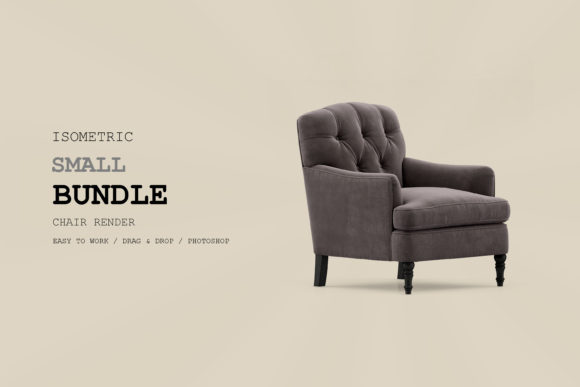
In the modern digital landscape, visual consistency and high-quality assets are no longer optional luxuries; they are fundamental requirements for effective communication. Whether you are designing a user interface, preparing marketing materials, or illustrating an educational concept, the speed at which you can produce professional-grade visuals often dictates your productivity and client satisfaction. This is where specialized asset packs become invaluable tools in a designer’s workflow. Specifically, the Isometric Armchair 3D Rendering Pack 145 offers a robust solution for professionals who need to integrate realistic, isometric furniture elements into their projects without the time-intensive process of modeling from scratch.
This pack is not merely a collection of images; it is a structured resource designed to streamline the creative process. By providing pre-rendered, organized, and high-resolution assets, it allows creators to focus on composition and storytelling rather than technical rendering hurdles. Understanding how this specific pack fits into broader workflows—from initial concept sketching to final publication—can significantly enhance the efficiency and quality of your output.
Understanding the Core Features and Technical Specifications
To appreciate the utility of Isometric Armchair 3D Rendering Pack 145, one must first look under the hood at its technical specifications. The value of any digital asset lies in its flexibility and compatibility with standard industry software. This pack is engineered to integrate seamlessly into popular graphic design and illustration platforms, ensuring that users can manipulate the elements to fit their specific needs.
The most critical feature for any serious designer is the separation of layers. Unlike flattened JPEGs or PNGs where every element is fused together, this pack provides separated background and separated shadow components. This distinction is crucial for depth and realism. When placing an armchair into a scene, the ability to adjust the shadow independently allows for accurate lighting simulation. If the light source in your background image comes from the left, but the chair’s shadow is fixed to the right, the result will look artificial and break the viewer’s immersion. With separated shadows, you can rotate, scale, or recolor them to match the ambient lighting of your project, ensuring visual coherence.
Furthermore, the inclusion of a help file indicates a thoughtful approach to user experience. For beginners or those integrating these assets into complex workflows, clear documentation reduces friction. It guides users on how to navigate the layer structure, how to export files in various formats, and best practices for maintaining resolution integrity. This support system is particularly valuable for freelance designers who may be working under tight deadlines and cannot afford to troubleshoot basic usability issues.
High Resolution and Print-Ready Quality
One of the primary constraints in digital asset usage is resolution. Many free or low-cost resources suffer from pixelation when scaled up, limiting their use to small web thumbnails. Isometric Armchair 3D Rendering Pack 145 addresses this by offering high resolution assets with a DPI of 300. In the printing industry, 300 DPI is the gold standard for sharp, crisp output. This specification opens up a wide range of applications beyond the screen.
For entrepreneurs and marketers, this means that a single asset can serve dual purposes: a vibrant thumbnail for social media and a high-fidelity component in a printed brochure or business card. When creating physical collateral, such as brochures for interior design firms or catalogs for furniture retailers, the clarity of the armchair rendering ensures that the product looks tangible and desirable. The lack of aliasing or blurriness preserves the premium feel of the final deliverable, which is essential for building brand trust and perceived value.
Practical Applications Across Industries
The versatility of Isometric Armchair 3D Rendering Pack 145 extends across multiple sectors, each leveraging the assets for different strategic goals. Let us explore how various professionals can integrate these resources into their daily operations.
Architecture and Interior Design Visualization
Architects and interior designers often struggle to communicate spatial concepts quickly to clients. While full 3D walkthroughs are impressive, they require significant processing power and time. Isometric views offer a middle ground: they provide a clear, angled perspective of a room layout without the complexity of photorealistic ray-tracing. Using this pack, designers can rapidly populate floor plans with furnished rooms. The organized layers allow for quick swapping of furniture styles, enabling rapid prototyping of different design schemes. A client can see exactly how a specific armchair model fits within a living space, aiding in faster decision-making and reducing revision cycles.
Education and E-Learning Development
Educators and instructional designers face the challenge of making abstract or spatial concepts engaging. Textbooks are static, and video lectures can lose attention. Infographics and interactive modules benefit greatly from consistent visual language. Isometric illustrations are particularly effective for explaining layouts, organizational structures, or home setups. Teachers can use these armchair renders to create scenes for storybooks, safety manuals, or architectural history lessons. The separated backgrounds make it easy to place the chair on any colored backdrop, allowing educators to customize visuals to match their curriculum’s theme without copyright issues or inconsistent art styles.
Social Media and Digital Marketing
In the fast-paced world of social media, content volume is key. Marketers need a steady stream of visually appealing posts to maintain engagement. Creating unique graphics for every post is unsustainable. Asset packs like this one serve as a library of reusable, high-quality components. A social media manager can combine the armchair with other isometric elements (like plants, rugs, or tech gadgets) to create endless variations of lifestyle imagery. For e-commerce brands, these renders can be used in ads to showcase products in context. The high resolution ensures that even when cropped for Instagram stories or LinkedIn banners, the image remains sharp and professional.
Website Design and UI/UX
User experience designers rely on visual hierarchy and aesthetic appeal to guide users. Isometric icons and illustrations are trending in web design because they add depth and interest without cluttering the interface. An armchair render might be used on a furniture website’s homepage, or metaphorically in a relaxation app to represent comfort and rest. The separated shadow feature is particularly useful here; designers can ensure that the drop shadow blends naturally with the website’s background color scheme, maintaining a clean and cohesive look across different pages and devices.
Workflow Integration and Best Practices
Integrating Isometric Armchair 3D Rendering Pack 145 into your workflow requires a systematic approach to ensure efficiency and consistency. Here are practical steps to maximize the utility of these assets.
1. Asset Organization: Before beginning a project, create a dedicated folder structure for your assets. Import the contents of Pack 145 into your design software’s library panel if available. This prevents the "file hunting" problem where time is wasted searching for specific PNGs or PSDs. Naming conventions should be clear, reflecting the orientation or style of the armchair.
2. Layer Management: When opening the files, take note of the layer hierarchy. Keep the background, object, and shadow layers distinct. Avoid merging layers until the final export stage. This non-destructive workflow allows you to tweak the opacity of the shadow or change the hue of the chair fabric later if the client requests modifications. Good organization here saves hours of rework.
3. Consistency Checks: If you are using multiple assets from different packs, check for lighting consistency. Ensure that the direction and softness of the shadows in the armchair render match the shadows in your other elements. Mismatched lighting is the quickest way to reveal that an image is a composite of disparate sources. Use adjustment layers in Photoshop or Figma to unify the color temperature across all elements.
4. Export Strategy: Depending on the end-use, choose the appropriate export format. For web use, export as PNG-24 to preserve transparency and quality, optimizing file size with tools like TinyPNG. For print projects, always export as PDF or TIFF with CMYK color mode to ensure accurate color reproduction on paper. Refer to the included help file for specific recommendations on bit-depth and compression settings.
Long-Term Value and Scalability
Investing in high-quality asset packs is a long-term strategy for scaling creative output. Unlike hiring a 3D artist for every new piece of content, a well-curated pack provides immediate access to production-ready graphics. As your business or personal brand grows, the need for consistent, high-quality visuals increases. Having a reliable library of isometric furniture allows you to maintain a uniform visual identity across all touchpoints, from your blog to your advertisements.
Moreover, the separated nature of the assets encourages experimentation. You can mix and match the armchair with different environments, testing which combinations resonate best with your audience. This data-driven approach to design—testing visual variations to see what performs better—is a hallmark of mature digital marketing strategies. Isometric Armchair 3D Rendering Pack 145 supports this iterative process by providing flexible components that adapt to changing trends and campaign requirements.
Ultimately, the goal of any creative professional is to deliver value efficiently. By removing the barriers of technical rendering and low-resolution limitations, this pack empowers you to focus on the core message of your work. Whether you are educating students, selling products, or designing spaces, the clarity and professionalism offered by these renders contribute directly to the credibility and impact of your final project. Integrating these tools thoughtfully into your routine transforms them from simple pictures into powerful instruments of communication.