Evaluating the 3D Crab SVG for Digital Crafting Projects
When integrating marine-themed designs into physical crafts, selecting the right file format is just as critical as the design itself. The 3D Crab SVG has emerged as a popular choice among hobbyists and professional designers alike, offering a unique blend of visual depth and technical versatility. This resource is not merely a flat illustration; it is a layered vector asset designed to simulate three-dimensional volume when cut or printed. For those navigating the complex landscape of digital crafting tools, understanding the specific capabilities and limitations of this asset is essential for achieving high-quality results.
The core appeal of the 3D Crab SVG lies in its multi-format availability. It is typically distributed in a zipped folder containing SVG, DXF, PNG, and EPS files. This comprehensive package ensures that users across different software ecosystems can utilize the design effectively. Whether you are working with laser cutters, vinyl plotters, or standard printers, having access to multiple formats allows for greater flexibility in project execution. However, choosing the correct format for your specific machine and software environment requires a clear understanding of how each file type functions.
Understanding Format Versatility and Software Compatibility
The primary advantage of acquiring the 3D Crab SVG download is its broad compatibility. Unlike single-format assets that restrict users to specific hardware, this collection supports a wide array of cutting machines and design programs. The decision on which file to use often depends on the software edition you own and the desired output quality.
Vector Formats: SVG, DXF, and EPS
Vector files are the backbone of digital cutting projects because they rely on mathematical equations rather than pixels, allowing for infinite scaling without loss of quality. The SVG (Scalable Vector Graphics) file included in the 3D Crab SVG pack is optimized for modern design software. It is fully compatible with Cricut Design Space, Silhouette Designer Edition, Make the Cut (MTC), Sure Cuts A Lot (SCAL), and Brother’s ScanNCut Canvas software. If you are using any of these platforms, the SVG file is generally the preferred choice due to its native support for layers and color separation, which can help in creating more intricate cuts.
For users operating on older or more basic software versions, the DXF (Drawing Exchange Format) file serves as a reliable alternative. Specifically, the DXF version of the 3D Crab SVG is designed for use with Silhouette Basic Edition. While DXF files are widely supported, they may lack some of the advanced layering features found in SVGs. Therefore, if your software does not support SVG natively, converting or using the DXF file ensures that the crab design remains editable and cuttable without compatibility errors.
The EPS (Encapsulated PostScript) file caters to professionals who work with industry-standard graphic design suites such as CorelDraw, Inkscape, and Adobe Illustrator. EPS files are robust and preserve complex vector data, making them ideal for users who need to further manipulate the crab design before exporting it to their cutting machine. If you plan to add custom text, adjust colors, or combine the crab with other elements in a detailed layout, the EPS format provides the necessary control and precision.
Raster Format: High-Resolution PNG
While vector files dominate the cutting community, the inclusion of a PNG (Portable Network Graphics) file adds significant value. The PNG provided in the 3D Crab SVG download is a photo file with a transparent background and a resolution of 300 DPI. This high resolution makes it suitable for printing on paper, cardstock, or fabric where a raster image is required. The transparent background is particularly useful for overlaying the crab design onto other images or backgrounds in photo editing software. If your project involves sublimation printing or decal creation where the machine reads pixel data rather than vector paths, this PNG file is the appropriate choice.
Comparing Approaches: Flat vs. Three-Dimensional Designs
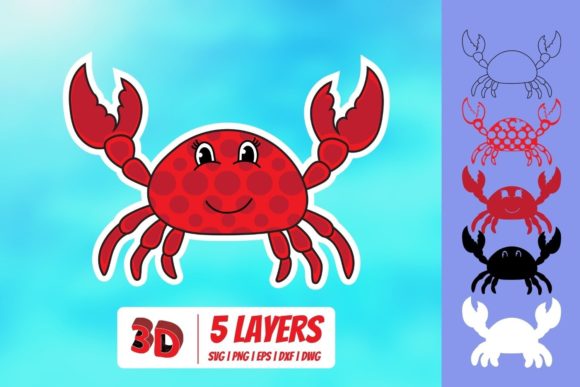
A key distinction between the 3D Crab SVG and standard crab illustrations is the perception of depth. Standard SVGs often represent objects in two dimensions, relying on shading or outlines to suggest form. In contrast, the 3D Crab SVG is engineered to create a volumetric effect. This is often achieved through layered cutting techniques, where multiple pieces are stacked to build height, or through strategic scoring and folding lines embedded within the vector data.
When evaluating options, crafters must consider the complexity of their equipment. A simple vinyl cutter might struggle to execute the fine details required for a true 3D effect if the design relies on delicate internal cuts. However, laser cutters and advanced CNC routers can handle the precision needed to bring out the full dimensionality of the crab. Users should assess whether their current setup can support the intricacies of a 3D design or if a simpler, flat-cut version would yield better results with less material waste.
Furthermore, the tradeoff between detail and durability is worth noting. Intricate 3D designs often have smaller connecting points that may be prone to breaking during the weeding process or subsequent handling. For children’s toys or items subject to rough play, a simplified 2D version of the crab might be more practical. Conversely, for decorative wall art, gift tags, or display pieces, the 3D aspect offers a superior aesthetic appeal that captures attention and adds a tactile element to the craft.
Decision Factors for Selecting the Right Resource
Choosing whether to proceed with the 3D Crab SVG download depends on several practical factors. First, evaluate your software proficiency. If you are comfortable manipulating layers in Cricut Design Space or adjusting nodes in Adobe Illustrator, the SVG and EPS files will provide the most creative freedom. If you are a beginner using Silhouette Basic Edition, the DXF file offers a straightforward path to completion without the learning curve associated with more complex software.
Second, consider the intended medium. Are you cutting vinyl for a laptop sticker? An SVG file is likely sufficient. Are you printing a greeting card? The 300 DPI PNG might be the best option. Are you creating a wooden sign with a laser cutter? You might prefer the EPS file for precise control over line weights and cut depths. By aligning the file format with the end goal, you ensure that the final product meets your quality standards.
Finally, think about the time investment. More complex 3D designs often require additional steps, such as assembling multiple layers or applying adhesives between cuts. If you are producing items in bulk for a sale, a simpler 2D design might increase your production speed. However, if uniqueness and premium quality are your priorities, the extra effort required to assemble the 3D Crab SVG can result in a higher-value product that stands out in a crowded market.
Practical Applications and Use Cases
The versatility of the 3D Crab SVG allows it to be applied across various seasonal and thematic projects. During summer months, it is an excellent addition to beach-themed decorations, pool party invitations, and nautical home decor. The three-dimensional aspect makes it particularly effective for pop-up cards, where the crab appears to emerge from the page, adding a delightful surprise element for the recipient.
In educational settings, this design can serve as a tool for teaching marine biology concepts. Teachers and parents can use the cut-out pieces to discuss the anatomy of crabs, using the different layers to highlight claws, legs, and shells. The transparency of the PNG version also allows for easy integration into digital presentations or online learning materials.
For small business owners, the 3D Crab SVG offers a way to differentiate products. Handmade jewelry charms, keychains, and ornaments featuring this design can command a higher price point due to the perceived craftsmanship involved in creating a 3D object. The ability to offer the design in multiple formats means that you can cater to a wider customer base, whether they prefer printed merchandise or custom-cut accessories.
Conclusion on Suitability
The 3D Crab SVG download represents a well-rounded resource for digital crafters. Its inclusion of SVG, DXF, PNG, and EPS formats ensures compatibility with a vast majority of cutting machines and design software, from consumer-grade devices like Cricut and Silhouette to professional tools like CorelDraw and Adobe Illustrator. While the 3D nature of the design adds complexity, it also enhances the visual impact and potential applications of the final product.
Ultimately, the decision to use this asset should be guided by your specific technical requirements and creative goals. If you value versatility, high-resolution printing options, and the ability to create layered, dimensional art, the 3D Crab SVG is a strong candidate. By carefully selecting the appropriate file format for your workflow, you can maximize the potential of this design and produce professional-quality results that resonate with your audience.